
Salts and everything about salts, how to protect bricks
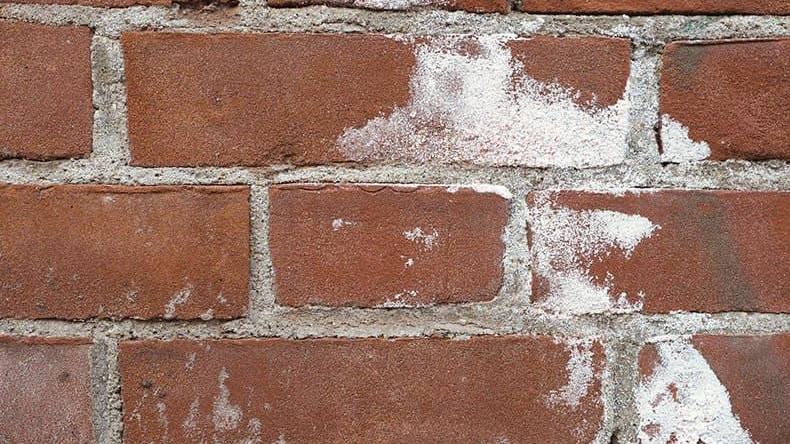
We have probably all seen white deposits on bricks, these are the so-called salts
In this post we will tell you about salts, myths and realities about salts, what causes them, how to remove them and how to avoid them.
Let's say you have completed the long-awaited brick facade or floor, everything is perfect and beautiful, but after a few days white spots (salts) have appeared. First of all, there is no need to panic, we are dealing with completely natural processes, this white precipitate is completely normal.
White precipitate on bricks or on the surface of any natural, porous material is salts - a fairly common and safe reaction to all types of natural materials, it is harmless to your bricks, so, once again, there is nothing to worry about. But let's figure it out!
What causes salts?
The reason may be many things:
The brick itself - as you know, brick is made of natural material, clay, and clay is found in nature, the soil naturally contains a certain amount of salt, and accordingly, small deposits of salts may be ‘stored’ in the brick structure, which are not visible in a dry state.
It should also be noted that in poor-quality, recycled, or low-quality clay, it is more than permissible.
Since brick is porous, water easily penetrates it. And when this happens, it dissolves all salt deposits, the water dries, and the salt remains on the surface.
Low-quality building materials - such as cement, sand - also contain a large amount of salts, and in most cases this is precisely the cause of salt deposition.
Rain, snow, or high humidity can also be the cause. Direct water flow onto the drain is unacceptable, both from the top of the wall and from the soil.
(It is necessary to have a 5-7 cm cover on top of the brick wall so that water does not enter the drain)
Dirty water - when there is no water on the site, rainwater or stagnant water is often used to wash the cement, which is strictly prohibited.
Environmental conditions - salt formation is more common in areas where there are significant temperature fluctuations, which leads to condensation. In regions where there is groundwater or surface water, the risks are also higher.
All this is understandable, but what can we do now?
The fresher the salts are, the easier they are to remove from the brick!
Before you move on to cleaning the brick, it is important to understand that improper cleaning methods can cause more damage. Follow the instructions:
1. Start with dry cleaning
One of the easiest and most effective ways to remove salts is to use a stiff bristle brush. Scrub the white deposits thoroughly with a dry brush and see if they come off. This should be done when the brick is perfectly dry.
Note: Bricks take a long time to dry, with an average drying time of 5-7 days for a 2cm thickness.
2. Try water and a mild detergent
If the dry method doesn't remove the stains, try warm water and a mild detergent (such as dishwashing liquid) and use a soft brush to scrub the affected area. Rinse thoroughly with clean water. This method works best when the salts are fresh and not too much.
2. Use a vinegar solution for more stubborn stains
A solution of white vinegar and water is also very effective. Mix one part vinegar with five parts water and scrub the brick with a brush. The vinegar helps to dissolve the salts, making them easier to remove. After cleaning, be sure to rinse thoroughly with water.
3. Various Commercial Cleaners
If the above remedies are not enough, consider commercial salt cleaners. These cleaners are specifically designed to dissolve salts without damaging the brick. Follow the manufacturer’s instructions carefully, and always test the cleaner on a small, inconspicuous area before applying it to a larger surface.
4. Avoid High-Pressure Washing
Although pressure washing may seem tempting, it can actually push water deeper into the brick, making it harder to remove salts in the long run. High-pressure washing can also damage old, soft brick, so it’s best to avoid this method.
5. Hydrochloric Acid – Dilute 1/3-1/5 with water, brush the wall, then rinse thoroughly with running water. Acid burns everything, it is very dangerous, and only an experienced professional should perform it. Eyes, respiratory tract and body must be completely protected from acid, the craftsman must wear a special mask and glasses, the building must be well ventilated for several days (I really don’t like this method, what can I hide from you)
6. The most extreme form of salt removal is mechanical grinding, or the so-called cyclovka, that is, when a certain part of the brick facade is peeled off (this method is mainly needed for old walls, secondary bricks, where salts that have accumulated over many years are found, as well as for improperly plastered bricks, when the salt has become like a varnish). This method has a negative side, in particular, if the treated surface of the brick is removed, it will peel off. The color will also peel off, and the brick itself will become thinner.
How to avoid white precipitate?
First of all, we “rest” the newly laid or built brick - we let it dry for 15-20 days, this period is enough for the brick to release what is inside and dry well. Only after this period do we start processing.
It is strictly forbidden to stain a brick that has not dried! This leads to the salts being under the varnish, which cannot be removed without the so-called cyclovka!
Sealing the brick
If the brick is clean after laying, and does not have any stains, it is better to treat it with a water-repellent insulating/nano liquid or varnish from the very beginning, this will protect it from further contamination and stains, and also make the brick easy to clean. Processing is quite easy, it reduces water absorption, which stops salts from coming to the surface.
To do this, look for a good quality breathable material that allows water vapor or moisture to escape from the bricks, but prevents water from penetrating. Before processing, the surface must be perfectly dry and free of all stains and salts.
If you notice that stains have appeared on a newly laid brick:
* As we have already said, for a newly laid brick/brick slab, we definitely let it dry for up to 1 month, for a thick brick 2 months, this period is enough to completely remove any stains. After that, if the stains have come out, we clean them and let them dry. Small stains sometimes go away on their own or are removed by rain.
* After they are cleaned and completely dry, we treat them with varnish or some kind of water repellent. This method will seal the brick, make it waterproof and easy to clean, and will also protect it from stains.
* Remember that sealing does not remove salts! Sealing protects against future contamination and preserves the original appearance. It is important not to expose the salts to the seal, clean them up, and seal them clean, as they are very difficult and time-consuming to remove later!
Find the source of water ingress
Salts are often the result of excess moisture, so finding and eliminating the root cause of water exposure is critical. Check for leaky gutters, poor drainage, or cracks in your walls that could be allowing water to seep into the brick.
Use quality building materials
When building or renovating, use quality materials that do not contain salts.
Improve ventilation
In enclosed spaces such as basements or interior brick walls, improving ventilation helps control moisture levels and reduces the likelihood of salts being introduced. Open windows, ventilate frequently, and use exhaust fans and fans.
Be aware that the newer the problem, the easier it is to fix. On older facades where there has been years of contamination, or on second-hand bricks where salts have been embedded for decades, simple methods will not be able to remove the background.
While salts are often just a cosmetic issue, recurring or severe cases may indicate a moisture problem that requires professional attention. If white spots persist despite your efforts, or if you suspect water damage, it is best to contact a waterproofing specialist. They can identify the source of the moisture and recommend long-term solutions to protect your brick.
Proper brick laying/construction and maintenance at the initial stage is very important, the result is the long-term beauty, quality and care of your home. It is the durability and beauty of bricks that are the reason for the centuries-old history of brick facades, which never go out of style and are still trendy today.